Moving to a new city is a huge deal: physically, emotionally and, of course, financially. There are a thousand decisions to make, and the consequences of those decisions will have a lasting impact. We can’t do much to make it any less stressful, but what we can do is give you some actionable advice on how to make your move to Tokyo one that doesn’t break the bank.
Did you know, for example, that studio apartments in Edogawa, over in the east of Tokyo, have a median rent of ¥74,000 a month, but in Minato (closer to the city centre) the same apartments would likely cost ¥140,000? That’s a huge 89% difference, and it means that the ward you choose to live in makes an enormous difference to your cost of living in Tokyo.
This guide gives you a simple, easy-to-understand breakdown of what you need to budget when you move to Tokyo. Only planning a visit? Our guide to Japan travel costs covers that instead.
Monthly Budget for One Person
First, let’s look at the headline figures:
| What You’ll Need | What It’ll Cost per Month |
|---|---|
| Rent: studio apartment | ¥74,000 to ¥140,000 |
| Rent: private room in a share house | ¥50,000 to ¥90,000 |
| Utilities (electricity, gas, water) | Around ¥12,800 |
| Mobile phone | ¥2,000 to ¥6,000+ |
| Food & eating out | About ¥42,000 (more on this below) |
| Total with a studio (budget phone plan) | About ¥131,000 (outer ward) to ¥197,000 (Minato) |
In a ward on the outskirts of Tokyo, rent for a studio, utilities and basic expenditure can come to around ¥131,000 including a budget phone plan and cheap meals. In Minato, that figure rises to around ¥197,000. On top of these, you’ll also need to factor in transport and personal spending, which will vary greatly depending on where you need to get to, and how much you typically spend on shopping. Internet is sometimes included in rent, but you may need to budget for a WiFi solution for your home if not.
Rent by Area
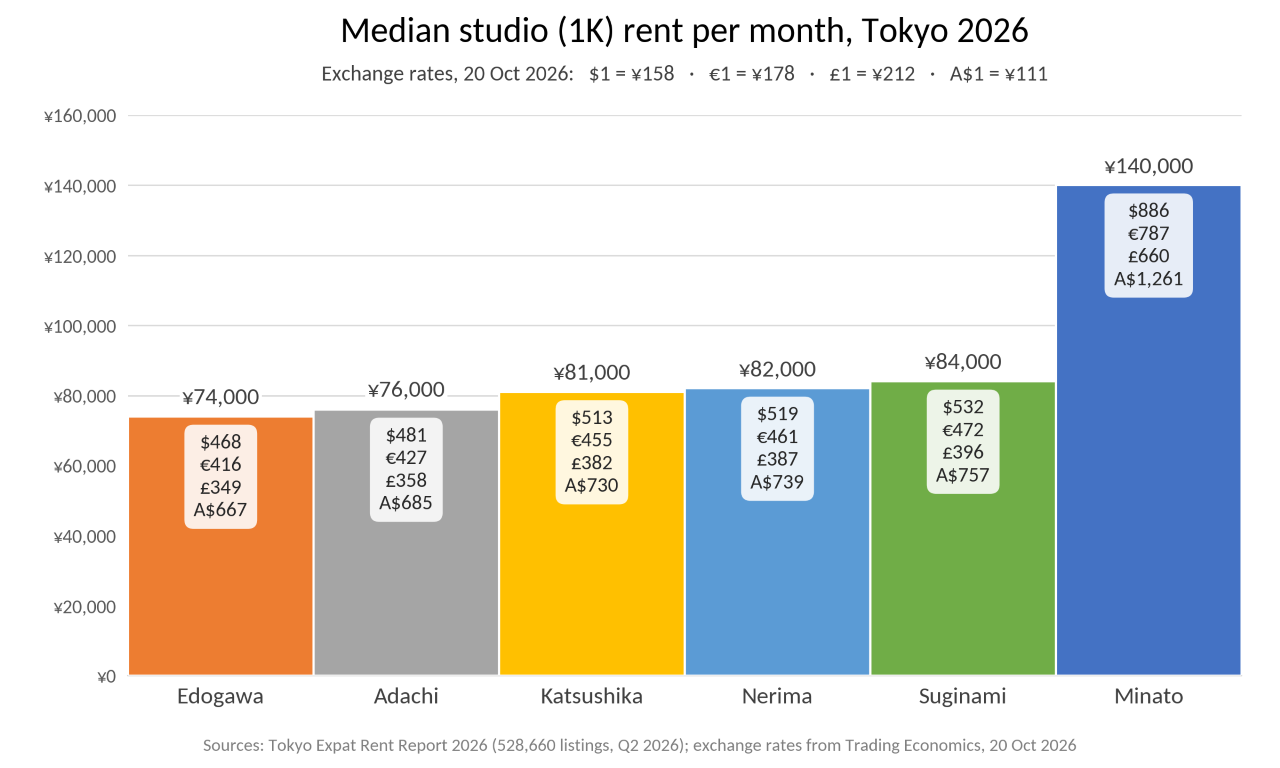
Rent, more than anything else, varies by ward. Tokyo Expat’s analysis of 528,660 property listings shows that the cheapest places to get a studio apartment in Tokyo are the outer wards of Edogawa, Adachi and Katsushika (median monthly rent of ¥74,000, ¥76,000 and ¥81,000 respectively), then areas like Nerima and Suginami.
Evidence from elsewhere paints a similar picture. E-Housing puts benchmark rents at around ¥91,000 for a 1K studio and ¥143,000 for a one-bed 1LDK. These are averages across all 23 of Tokyo’s wards. When narrowing down to just the central wards, those figures rise to around ¥110,000 and ¥193,000.
In US dollars, a studio in Tokyo’s 23 wards costs roughly $460 to $875 per month. It’s worth remembering that a standard lease agreement demands several months’ worth of rent upfront. Our Moving to Japan guide explains what you should expect from this, including typical deposits and guarantor fees.
Share Houses

If a private apartment is too expensive, share houses can be a great, cost-effective option. A share house can give you a fully furnished private room, with a shared kitchen and bathroom. Private rooms cost between ¥50,000 and ¥90,000, whereas shared or dormitory rooms cost around ¥30,000 to ¥60,000. These typically don’t require any guarantor or key money, and you can be moved in within days of applying. Upfront costs tend to be one month’s rent (as opposed to five months plus a guarantor for a standard lease!).
As ever, it’s a good idea to read the small print. Many share houses charge a separate ‘common fee’ that covers utilities, WiFi and cleaning. This can be around ¥10,000 to ¥20,000, so make sure you compare the whole fee to other options, not just the rent.
Utilities and Internet
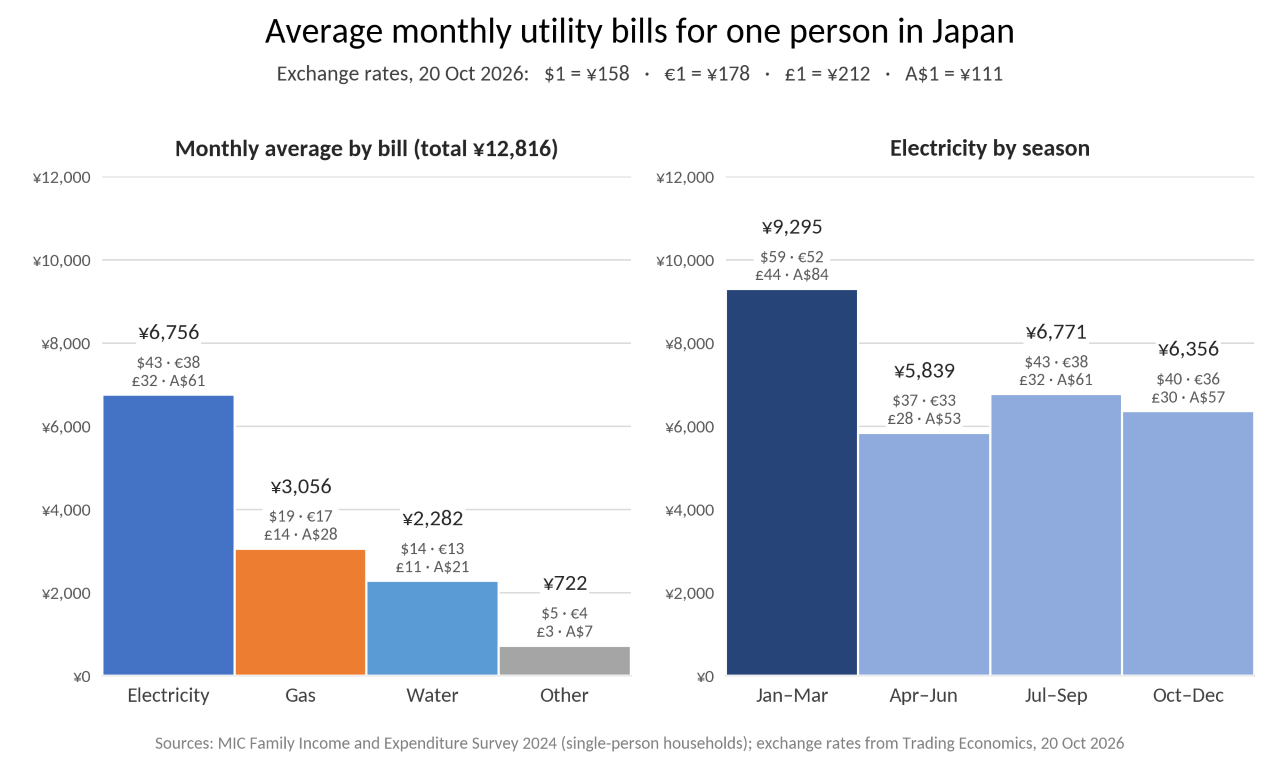
According to the Japanese government’s national Household Survey, the average single person in Japan spends ¥12,816 a month on utilities. That’s ¥6,756 on electricity, ¥3,056 on gas and ¥2,282 on water. In winter, the cost of electricity can get up to around ¥9,295 per month (that’s the January to March average). But if you choose a share house over a private rental, your common fees will often cover these costs, avoiding an unwelcome bill shock around Christmas!
Phone Plans
Mobile phone costs vary depending on the type of provider you choose. The big carriers can start at around ¥6,000 per month for a basic plan, but discount operators can get your phone working for closer to ¥2,000 per month. If you’re new to Japan, getting a long-stay SIM or eSIM with a Japanese phone number is a must, as overseas numbers won’t be accepted by Japanese banks, and many services will only send verification codes to Japanese phone numbers.
Food
If you want to, you can eat pretty cheaply in Tokyo. In Sukiya, a regular beef bowl costs ¥450, and a typical bowl of shoyu ramen in the city costs around ¥610 (that’s actually below the national average of ¥736). If we take the average prices of an onigiri (¥214), a beef bowl and a bowl of ramen as a typical day’s food, that adds up to about ¥1,400 per day, or ¥42,000 per 30-day month. Not that we’re recommending such an unvaried diet, of course! For a more detailed look into the cost of food in Japan, check out our Meal Prices in Japan guide.
What Sort of Salary Do You Need?
It’s commonly suggested that your rent should be around 25 to 30% of your take-home pay in order to live comfortably in Tokyo. Based on that, E-Housing estimates you’ll need a gross salary of about ¥4.5 to ¥5.5 million per year to comfortably afford a ¥90,000 studio apartment. Single-person households in Japan spent an average of ¥173,042 per month in 2025, but that’s a national figure and includes cheaper cities than Tokyo.
To see how these figures compare with entry-level pay, take a look at the minimum wage in Japan. Working remotely for a company abroad? Our digital nomad visa guide is worth a read.
Choose Your Ward, Then the Rest
The single biggest factor impacting your cost of living in Tokyo is your rent, and that depends massively on the ward you choose to live in. A city-centre apartment can cost almost double the price of a similar one in an outer ward, so it’s worth weighing up what matters most to you: cost or location.
An outer-ward studio plus modest spending comes to around ¥131,000 per month before transport and other extras, and choosing a share house can lead to further significant savings while helping you avoid hefty upfront costs.
Once you have a budget, make sure you take a look at our Moving to Japan guide, and get yourself a long-stay SIM with a Japanese number before you sign that lease.