Minimum Wage in Japan 2026: Rates, the October Rise and Average Salary
Japan’s minimum wage is rising faster than at any point since it switched to hourly rates. The 2025 revision added a record ¥63 to the national average, and another rise arrives in October 2026. Even so, a full-time job at Tokyo’s rate pays about ¥212,000 a month before tax. This guide covers the current rates, what changes this autumn and what the average worker earns.
Japan’s minimum wage now
Japan has no single national minimum wage. Each of the 47 prefectures sets its own rate, and some industries have higher sector-specific minimums. The figure people quote is the national weighted average.
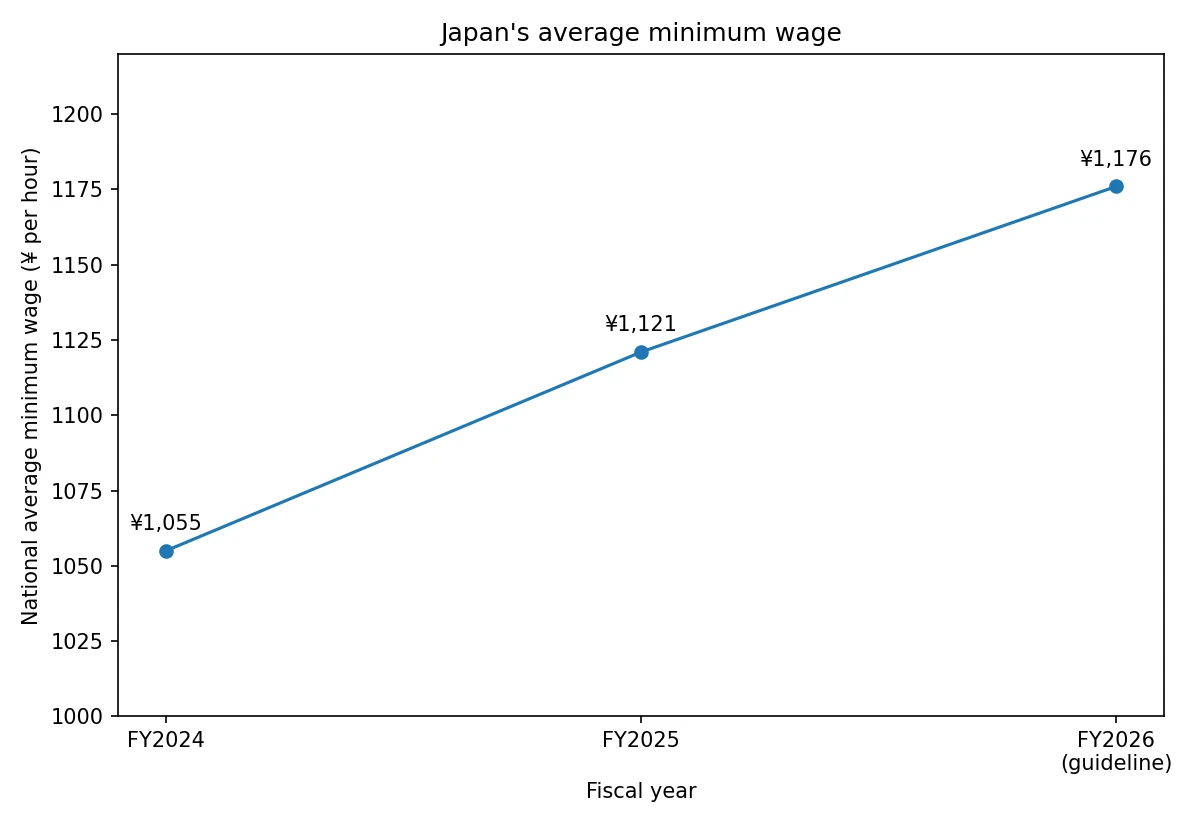
After the latest revision, which took effect between October 2025 and March 2026 depending on the prefecture, that average stands at ¥1,121 an hour, up ¥66 from ¥1,055.
Rates range from ¥1,023 in Okinawa to ¥1,226 in Tokyo, and every prefecture now pays more than ¥1,000 an hour. Tokyo and Kanagawa, at ¥1,226 and ¥1,225, became the first to pass ¥1,200.
| Prefecture | Minimum wage (per hour) |
|---|---|
| Tokyo | ¥1,226 |
| Kanagawa | ¥1,225 |
| National weighted average | ¥1,121 |
| Okinawa (lowest) | ¥1,023 |
What changes in October 2026
On 28 July 2026, the Central Minimum Wage Council set its guideline for this year: a rise of ¥54 for the six Rank A prefectures, including Tokyo, and ¥56 for the rest. If prefectures follow it, Tokyo’s rate rises to about ¥1,280 from October, and the national average moves from ¥1,121 to ¥1,176.
Workers’ groups had pushed for a ¥75 rise. Prefectures set their own effective dates, so check your prefecture’s labour bureau for the exact date and final figure.
What minimum wage pays per month
At Tokyo’s current rate, a full-time worker earns about ¥212,000 a month before tax and social insurance. At the national average, the figure is about ¥194,000.
Set that against rent. A studio in Tokyo’s cheapest wards has a median rent of ¥74,000 a month, and one in Minato costs ¥140,000. On minimum wage, an outer-ward studio takes more than a third of gross pay before bills. If you plan to work part-time on a working holiday, a share house or a cheaper city stretches your budget further.
The ¥1,500 target
The government has aimed to bring the national average to ¥1,500 during the 2020s, which would need rises of about 7.3% a year. The FY2026 rise falls short of that pace, and reports now place the deadline in the early 2030s.
Average salary in Japan
The National Tax Agency’s latest survey puts the average annual salary at ¥4.78 million, a record. That average covers all private-sector employees, so individual pay varies widely. To see how far that salary goes on property, read our guide to what a house costs in Japan.
Part-time workers earn an average of about ¥1,300 to ¥1,370 an hour, above every prefecture’s current minimum.
Wages are rising, so plan the budget
Japan’s minimum wage reaches about ¥1,176 on average from October 2026, and Tokyo’s reaches about ¥1,280. That still makes a Tokyo minimum-wage job a tight fit for a solo renter. Before you move or take a working holiday, compare the pay on offer with our cost of living in Tokyo guide, and read our moving to Japan guide for the costs you pay up front.