How Much Money to Bring to Japan: Cash, Cards and Tipping in 2026
Japan still has a reputation as a cash country. The government’s own figures say otherwise: in 2025, 58% of consumer spending happened without cash. You need less cash than older guides suggest, but you still need some, and you can leave the tip budget at home. This guide covers how much cash to carry, where your card works, which ATMs take foreign cards and how tipping works. If you’re still planning your overall budget, start with our guide Is Japan Expensive?
How much cash to carry
You do not need to land with a large stack of yen. Carry enough for the places that still want cash, and top up at ATMs as you go.
A simple method works well. Withdraw ¥20,000 to ¥30,000 at a time, because Japanese ATM fees stay the same whatever amount you take out. ¥20,000 goes a long way on cash-only meals: a regular beef bowl costs ¥450 and an average bowl of ramen ¥736, and many of those small restaurants are exactly where you will need cash.
Plan on cash for small, older restaurants, shrines and temples. Use a card or IC card for most other spending.
Cash or card: where each works
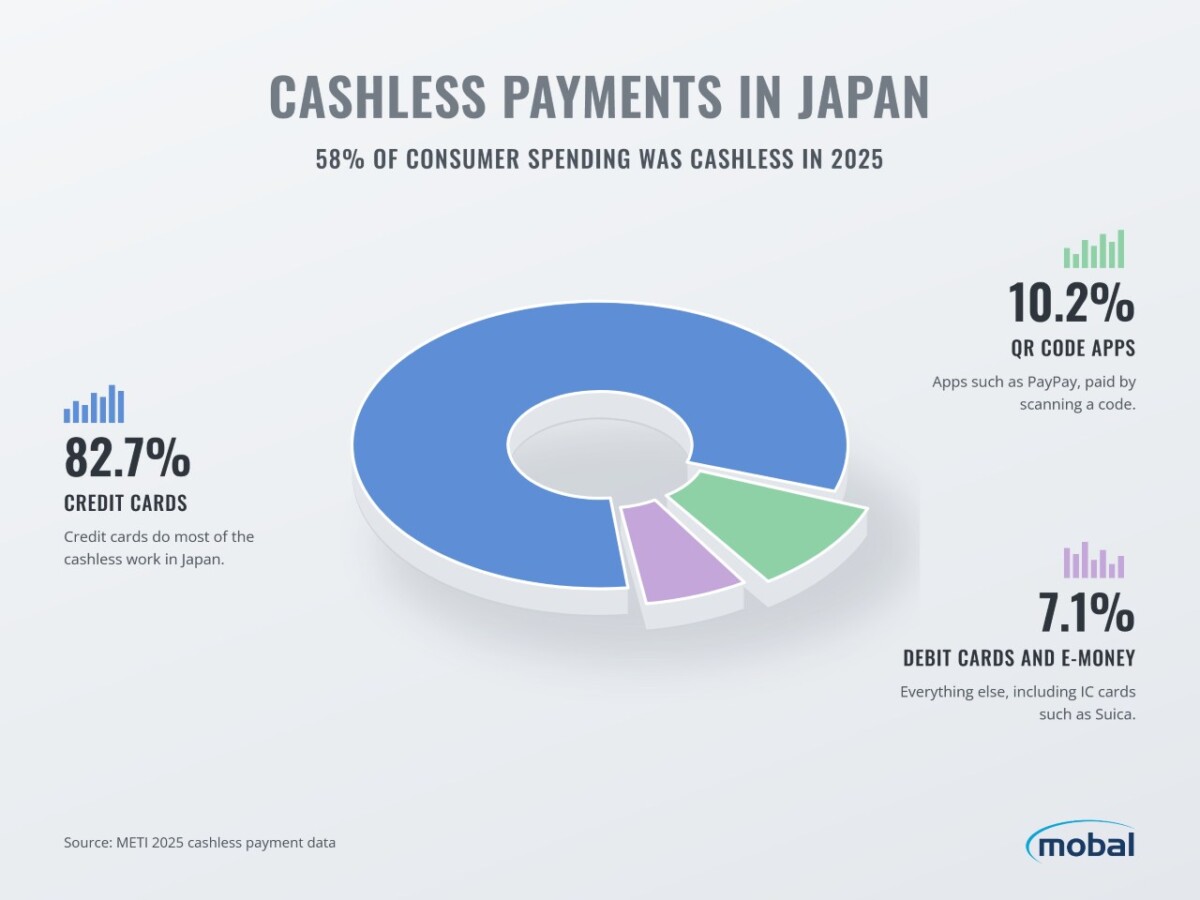
Japan’s cashless share has grown fast. METI put the 2025 ratio at 58.0%, and the government now aims for 65% by 2030. Under METI’s older measure, which some analysts still use for international comparisons, the figure is about 46%. Either way, cash still covers a large part of spending.
Credit cards do most of the cashless work, making up 82.7% of cashless payment value. QR code apps such as PayPay account for 10.2%. As a visitor, your card and an IC card will cover most payments.
When a card machine or ATM offers to charge you in your home currency, choose yen. Your own bank then does the conversion.
Withdrawing yen: ATMs
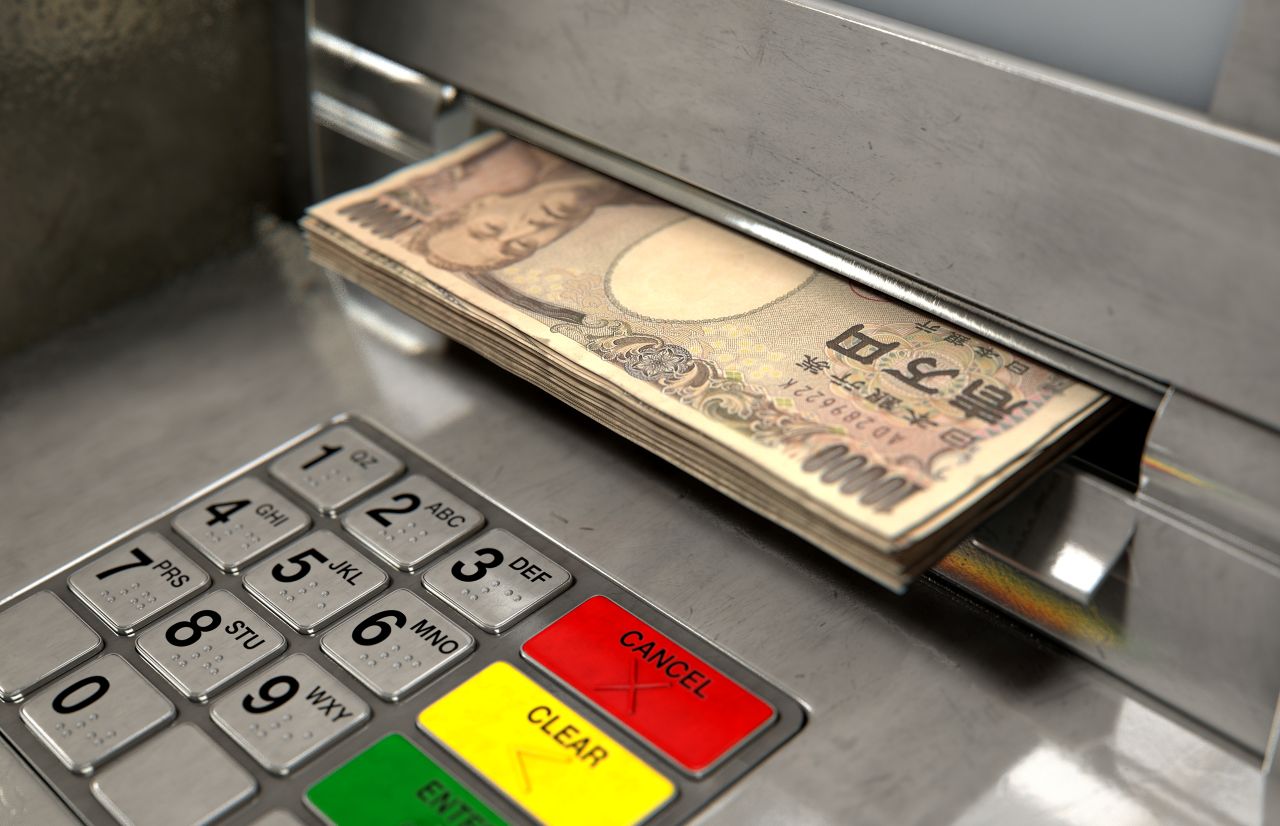
Two ATM networks reliably accept foreign cards: 7-Eleven and Japan Post Bank. Many ordinary bank ATMs do not. With more than 21,000 7-Eleven stores in Japan, you rarely have to walk far.
Seven Bank, which runs the 7-Eleven machines, lets you withdraw up to ¥100,000 per transaction with an overseas card, or ¥30,000 if the machine reads the magnetic stripe. Its ATMs work day or night, in 12 languages. Japan Post Bank caps foreign-card withdrawals at ¥50,000, and a ¥220 fee may apply.
Expect two layers of fees: the ATM operator’s charge and whatever your own bank adds. Seven Bank’s fees vary by card brand, and your issuer may charge on top. A travel card with low foreign-transaction fees cuts the second layer.
IC cards and mobile payments
For trains, buses, vending machines and convenience stores, an IC card such as Suica is the easiest way to pay. Our Suica card guide explains how to get one and top it up. Setting up a phone wallet needs a data connection, so sort your data before you arrive.
Tipping in Japan
Tipping in Japan is not expected. JNTO, Japan’s national tourism organisation, states that tipping is not customary in restaurants, taxis, bars or hotels.
A few exceptions exist, and even these are optional:
- High-end ryokan. At some traditional inns, guests give a gratuity called kokorozuke near the start of the stay. For exceptional personal service from a room attendant, you could give ¥1,000 to ¥3,000 in an envelope, though this is uncommon.
- Private guides and interpreters. Those used to overseas visitors may accept a tip. JNTO advises giving it discreetly, in an envelope, which you can buy at a convenience store or 100-yen shop.
Two charges can look like tips but are not. Upscale restaurants, luxury hotels and ryokan may add a service charge of about 10 to 15%, shown on the bill. Most izakaya serve a small appetiser you did not order, called otoshi, which costs ¥300 to ¥800 and works as a seat charge. Neither calls for anything extra.
Before you fly
- Tell your bank you are travelling and check its foreign ATM fees.
- Pack two cards on different networks in case one is declined.
- Plan to withdraw ¥20,000 to ¥30,000 at a time from a 7-Eleven or Japan Post ATM.
- Always pay in yen when asked.
- Set up mobile data so maps, wallets and translation apps work on arrival.
Less cash, no tips
With 58% of spending now cashless, Japan runs on cards and IC cards more than its reputation suggests. Carry enough cash for small restaurants and temples, withdraw from 7-Eleven or Japan Post ATMs as you go, and skip the tips. Then set up a Japan eSIM or pocket WiFi so your wallet apps and maps work from the moment you land.